Launch pricing: the full kit, 90 illustrated pages, is $27 while we're newLaunch pricing: full kit, 90 pages for $27
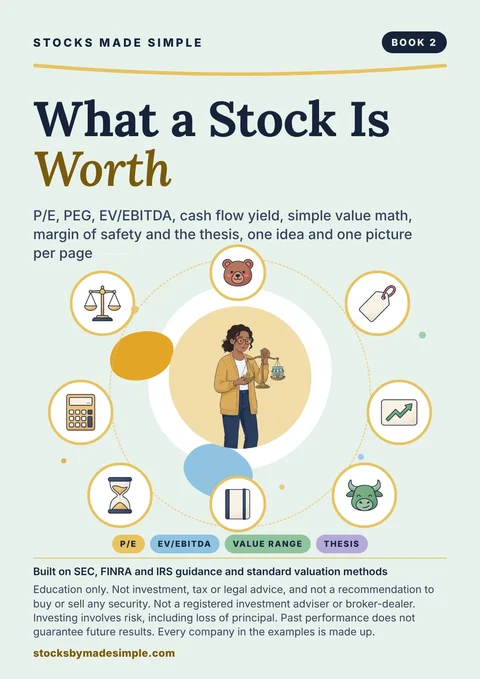
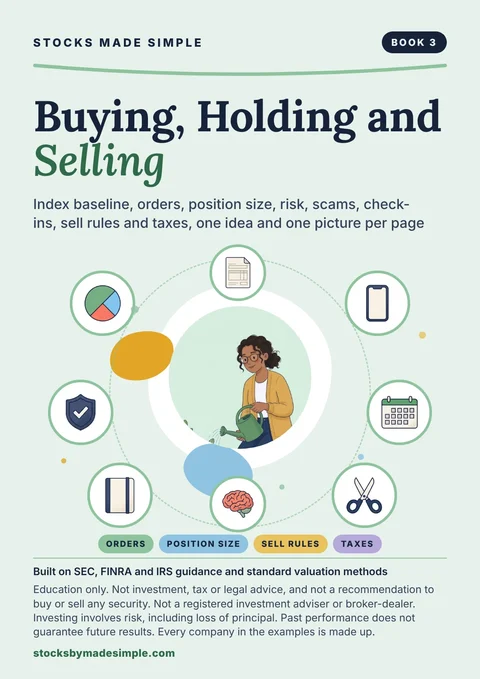
Reading a Company cover What a Stock Is Worth cover Buying, Holding and Selling cover

How to Research a Stock Yourself. Explained With Drawings.

Three illustrated guides that teach a method: how to read a company's numbers, how to put a range on what a stock is worth, and how to buy, hold and sell with rules you write down first. One idea a page, each one drawn. Education only, no stock picks.

Secure purchase No subscription 7-day guarantee

Here's what the pages look like

Real pages from all three guides. One idea a page, drawn, worked on made-up companies.

What's included

Three illustrated guides

Reading a Company, What a Stock Is Worth, and Buying, Holding and Selling. 90 pages, one idea each.

One idea, drawn

The idea, the picture, the costly mistake and one line to remember, worked on made-up companies you can follow.

Made for your phone

Phone-sized PDFs to read next to a filing or a broker app, yours to keep. Nothing to cancel.

Anyone can buy a stock in ten seconds. Few are taught to read the business.

Most of the money new stock pickers lose goes quietly: a low P/E that was low for a reason, a favorite idea that grew to half the account, a sale made in a panic. Every one of them has a page, and every page names the mistake.

Where new stock pickers lose money:

Calling a low P/E cheap on its own, when buyers are paying less for profits they expect to shrink

Putting a big slice into a favorite idea, because confidence feels like information

Selling because it's down, or holding because selling would make the loss real

From Book 1 · Cash flow

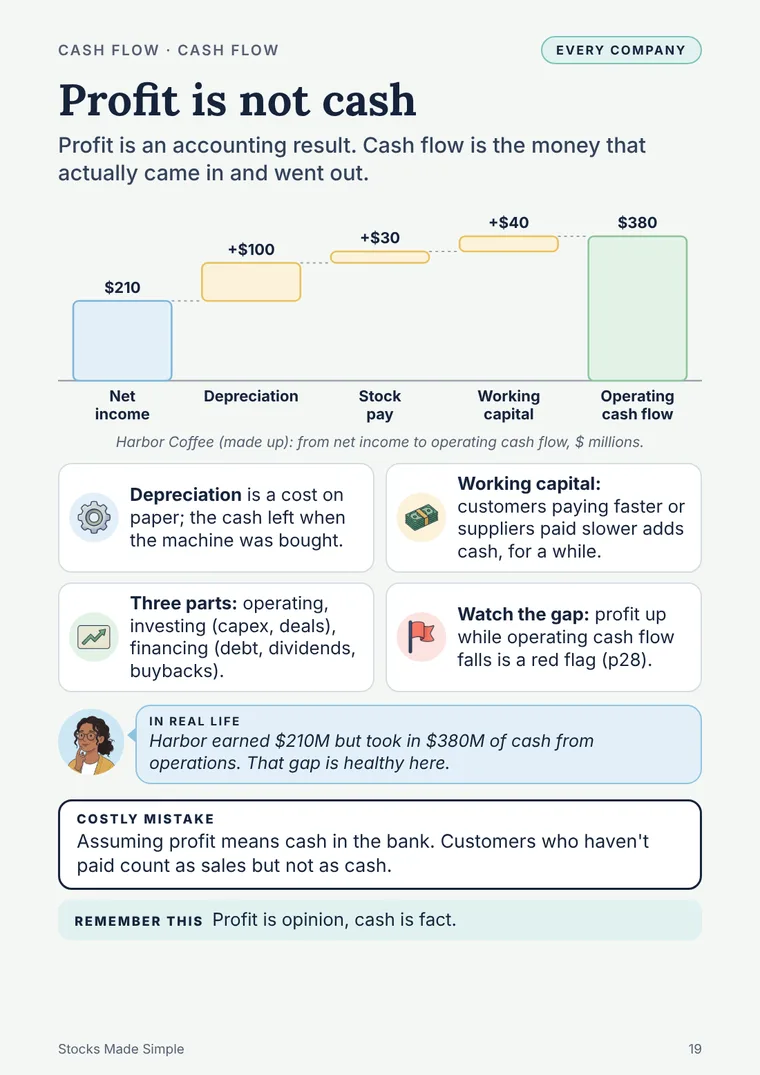
Profit is not cash

Book 1, page 19, Profit is not cash: Harbor Coffee, a made-up company, earned $210 million but took in $380 million of cash from operations
From Book 1 · page 19
Remember this Profit is opinion, cash is fact.
In real life Harbor earned $210M but took in $380M of cash from operations. That gap is healthy here.

A drawing is easier to take in than a paragraph of a 10-K. That's why every page in the kit has one, and one line to keep.

Same broker app. A very different way to decide.

From this

Learning it the expensive way

  • A forum thread at midnight that argues with itself about whether a stock is cheap
  • A tip from someone who seems sure, and no number of your own to check it against
  • Finding out after you bought that the debt was due next year
To this

The page for this decision

  • One idea, one drawing, read in a minute
  • The numbers worked on a made-up company, step by step
  • The costly mistake named, so you skip it instead of paying for it

One page, up close

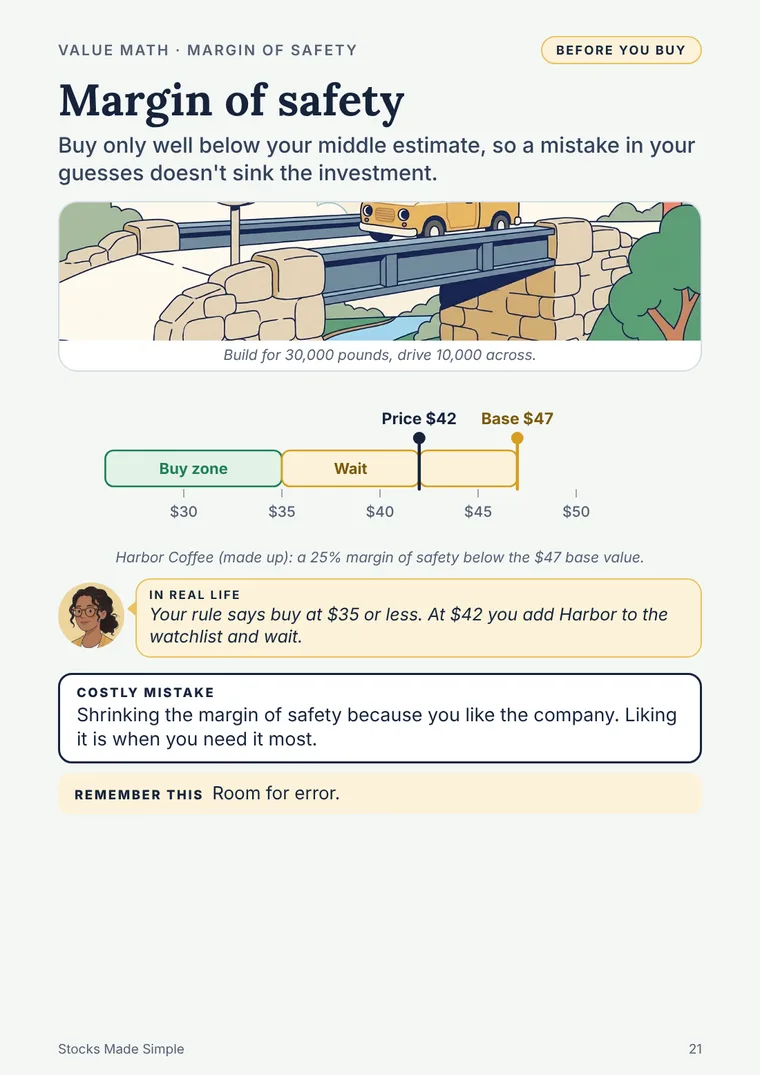
Every page has the same parts, so you always know where to look. Here is Book 2, page 21, Margin of safety, with its lines quoted from the guide.

Book 2, page 21, Margin of safety: the whole page
The idea

Buy only well below your middle estimate, so a mistake in your guesses doesn't sink the investment.

In real life

Your rule says buy at $35 or less. At $42 you add Harbor to the watchlist and wait.

Costly mistake

Shrinking the margin of safety because you like the company. Liking it is when you need it most.

Remember this

Room for error.

Quoted word for word from Book 2, page 21, Margin of safety. Harbor Coffee is a made-up company; every company in the kit is. Every page carries these parts plus the drawing.

The three guides

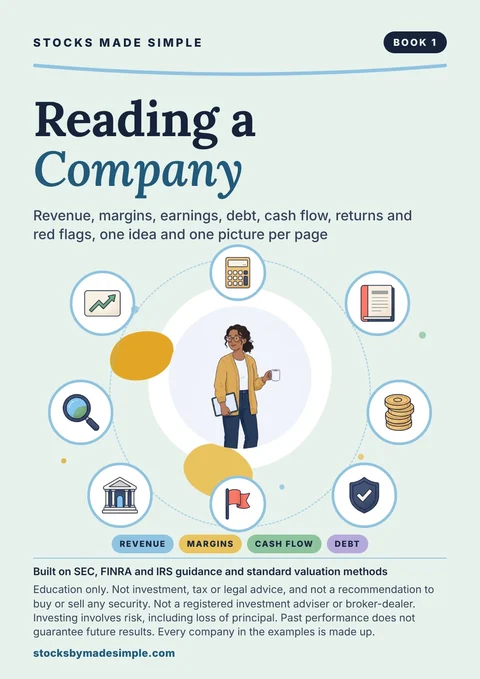
Book 1: Reading a Company

30 teaching pagesSix partsEvery page drawnRead the numbers

What you own when you buy a share, where the numbers live, and how to read them, one idea a page. Six parts: What you own, The income statement, The balance sheet, Cash flow, Quality and Putting it together. Start with owning a slice of a business.

  • What you own: a share as a slice of a business, why prices move, funds and the index, market cap, the 10-K, 10-Q and 8-K, and the three statements
  • The income statement: revenue, gross and operating margin, net income, earnings per share, dilution and buybacks, and adjusted earnings
  • The balance sheet: assets and liabilities, paying the bills, goodwill, cash and net debt, and how much debt is too much
  • Cash flow: profit is not cash, free cash flow, capex, stock pay and where the cash goes
  • Quality: returns on equity and capital, the moat, management and insiders, earnings calls and red flags
  • Putting it together: a company on one page and your ten-minute first look
Book 2: What a Stock Is Worth

30 teaching pagesSix partsEvery page drawnValue a stock

Price is what you pay; value is what you get. How to put a range on what a stock is worth, and write down why, in the same layout.

  • Price and value: the P/E ratio, trailing and forward, when it misleads, and growth with the PEG ratio
  • Other yardsticks: price to sales, enterprise value, EV to EBITDA, free cash flow yield, price to book and dividend yield
  • Comparing fairly: peers, the company's own past, sector norms, value traps and stocks that are expensive for a reason
  • Simple value math: a dollar later, a simple discounted cash flow, small changes, bear, base and bull values, margin of safety and what the price expects
  • Kinds of stocks: fast growers, steady compounders, dividend payers, cyclicals and long shots
  • The case: the bull and bear case, what would change your mind, and the one-page thesis

Book 3: Buying, Holding and Selling

30 teaching pagesSix partsEvery page drawnSell rules and taxes

From the index fund baseline to the order ticket, the check-in and the sale, with the rules you write down before you buy, one idea a page.

  • Before you buy: index funds as the baseline, core and explore, first things before stocks, accounts, screening and ideas from your own life
  • Buying: market and limit orders, the spread, position size and buying in pieces
  • Risk: diversification, normal drops, sector weight, margin, day trading and options, and scams
  • Holding: a quarterly check-in, when the price drops, dividends, a decision journal and measuring yourself honestly
  • Selling: good and bad reasons to sell, trimming and rebalancing, and stop-loss orders
  • Taxes and your mind: tax-loss selling and the wash sale, short- and long-term gains, biases, the noise and your rules on one card

Here's everything you get

What a Stock Is Worth Reading a Company Buying, Holding and Selling

The Stocks Made Simple Kit

  • Reading a Company34 PDF pages, 30 teaching pages: the filings, revenue and margins, earnings per share, debt, cash flow, returns, the moat and red flags
    $45
  • What a Stock Is Worth34 PDF pages, 30 teaching pages: P/E and its limits, EV/EBITDA, free cash flow yield, peers, a simple discounted cash flow, value ranges and margin of safety
    $25
  • Buying, Holding and Selling34 PDF pages, 30 teaching pages: the index baseline, orders, position size, diversification, scams, check-ins, sell rules and taxes
    $25

Total value: $95

Launch price
$27

One-time payment. No subscription. Keep the files forever.

Yes, I want the kit for $27
Secure purchase No subscription 7-day guarantee
Payments by Stripe

Digital guides (PDF), in English. We email your library link right after purchase, and you can download the files again anytime. Plus sales tax where applicable.

Stocks Made Simple is an independent guide that teaches how to research stocks. It is education only: not investment, tax or legal advice, not personalized to you, and not a recommendation to buy, sell or hold any security. Stocks Made Simple is not a registered investment adviser or broker-dealer. Investing involves risk, including loss of principal. Past performance does not guarantee future results.

Is this kit for you?

You own index funds and want to look at single stocks

Book 3 starts where you are: the index fund as the baseline every pick has to beat, core and explore, and how much to put in any one stock before you buy your first share.

You've bought on tips, and want your own reasons

Book 1 shows where the numbers live and how to read them: revenue, margins, cash flow, debt and the red flags. Book 2 shows how to put a range on what a stock is worth and write the thesis down.

You hold a few stocks and never know when to sell

Check-ins, what to do when the price drops, good and bad reasons to sell, trimming, stop-loss orders and the tax side of selling, each on its own page, with rules you write before you buy.

How this kit is made

No gimmicks and no picks. Public rules and investor education from the SEC, FINRA and the IRS, and the valuation methods taught in every finance course, drawn clearly, with the source named on the page where it matters.

Built on named sources

The filing, account, order, margin and scam pages follow SEC and FINRA investor education and rules; the tax pages follow IRS publications for the year shown; the valuation pages follow standard methods. Every page was checked against its named sources before release.

Made-up companies, on purpose

Harbor Coffee, Kestrel Software and their peers do not exist. Every number in the examples is made up, so you can follow each step without anyone telling you what to buy. The method is what you take to a real filing.

Education, not advice

The kit teaches a way to research and decide. It doesn't know your money, your goals or your taxes, and it never says buy or sell. A licensed professional can apply it to your situation.

Independent, on purpose

Not affiliated with or endorsed by the SEC, FINRA, the SIPC, the IRS, any stock exchange, any index provider, any brokerage, any data provider or any company. We answer to the reader.

7-day money-back guarantee

Use the kit for 7 days. If it isn't for you, email us and you get 100% of your money back. No fine print, no hassle.

Questions, answered

How do I get it?

Right after purchase we email you a link to your library, where you download all three guides as PDFs. You can come back and download them again anytime.

Is this a one-time payment or a subscription?

One-time payment of $27. No subscription, no recurring charges, and nothing to cancel. All three guides are yours to keep.

Does it tell me which stocks to buy?

No. It teaches a method for researching a company yourself: reading its numbers, putting a range on what it's worth and setting your own rules for buying and selling. Every company in the books is made up, and nothing in them is a recommendation to buy, sell or hold anything.

Who is it for?

US adults who already invest, often through index funds or a 401(k), and want to research individual companies carefully before they buy any.

Do I need to know accounting?

No. Book 1 starts with what a share is and builds up one idea at a time, with every number worked on a made-up company. If you can follow a household budget, you can follow the pages.

Is it investment advice?

No. Stocks Made Simple is an independent guide that teaches how to research stocks. It is education only: not investment, tax or legal advice, not personalized to you, and not a recommendation to buy, sell or hold any security. Stocks Made Simple is not a registered investment adviser or broker-dealer. Investing involves risk, including loss of principal. Past performance does not guarantee future results.

Do I need to buy anything else?

No. The kit is complete on its own.

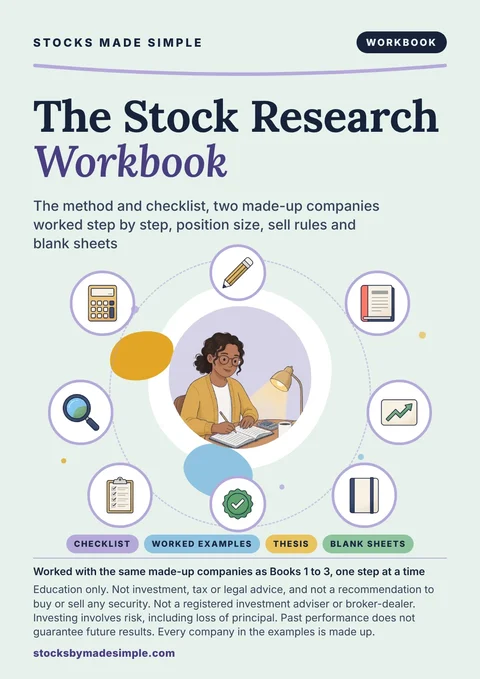
The Stock Research Workbook cover

At checkout there is one optional add-on, The Stock Research Workbook: the method and a twenty-question checklist, two made-up companies worked step by step, position size and sell rules worked out, and blank sheets to copy for each company you research. It's $9, unticked, and you can skip it.

Can I use it on my phone? Can I print it?

Both. The pages are portrait and phone-sized, so you can read one next to a filing or your broker app, and the PDFs print if you want a page on your desk.

Will it make me money?

We don't promise that, and we'd be wary of anyone who does. Investing involves risk, including loss of principal, and past performance does not guarantee future results. The guides show you how each piece of the research works and the mistakes that cost money. What you buy and when is still your call.

What if it isn't for me?

Email us within 7 days of purchase and we'll refund 100% of your money. Details on the refund policy page.

One last thing before you decide

Every stock you buy on a tip teaches you something, and the expensive lessons come out of your account. You don't need another midnight forum thread or someone who sounds sure. You need the page for this decision, with the idea drawn and the mistake named, and your own reasons written down.

Get instant access
Access confirmed ·
Full kit$27
Get instant access
The full kit · $273 illustrated guides · 90 pagesGet instant access